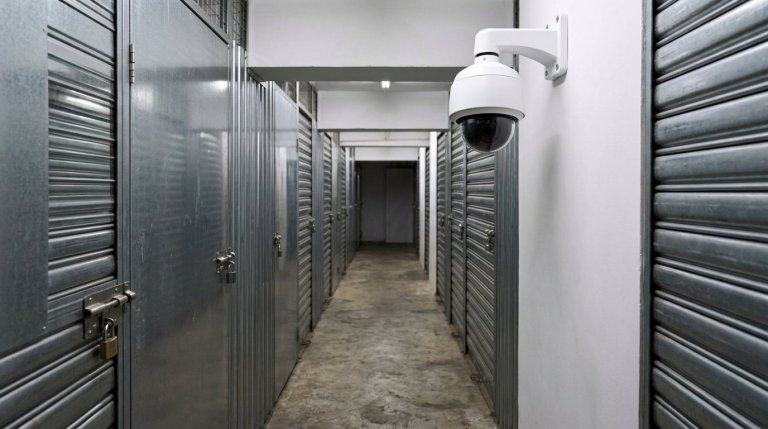

The nearest self-storage unit may not necessarily be the most suitable option; when choosing a self-storage location in Hong Kong, you should consider how you typically travel there, whether you need parking or a loading bay, as well as the storage environment and size required for your belongings. Whilst a convenient location is certainly important, rental costs, facilities and branch coverage will also affect how hassle-free your day-to-day use is.This article will compare transport links, parking, loading and unloading, storage environment, rental rates, unit size, facilities and branch coverage point by point, to help you identify the most suitable options based on your needs for home storage, moving house, renovation or business storage.
Key Points of the Article
- Compare locations based on your usual method of travel and frequency of collection to determine whether transport convenience is more important than other factors.
- Pay attention to aisles, air conditioning and cleanliness, and assess the storage environment based on the nature of your items and storage arrangements.
- First, make a list of the items you intend to store, then estimate the space required to avoid making a decision based solely on the size of the storage unit.
- If you need to drive yourself or transport large items, factor in parking and loading/unloading arrangements when comparing locations.
- Make the most of the network of branches across Hong Kong’s various districts to choose a self-storage unit or mini-office that best suits your daily travel patterns.
Transport links, parking and loading/unloading convenience
When choosing a location, first consider where you are travelling from. If you live in Kwun Tong, you might start by comparing transport routes near Kwun Tong for weekday collections. If you work in Tsuen Wan, you could include Tsuen Wan in your shortlist.Do not rely solely on the straight-line distance on a map. The actual journey also involves walking, changing transport and carrying items. If travelling by MTR, check whether you’ll need to walk a further distance from the station to the warehouse entrance.If travelling by bus or minibus, factor in both your alighting point and the walking route. If you’re only collecting small items each time, a smooth public transport connection may be more practical. However, if you need to move boxes or equipment, changing transport and carrying luggage along the way will add to the effort involved.
Next, distinguish between ‘being near the location’ and ‘convenient access to the storage unit’. First, confirm the location of the entrance, then visualise the entire route from the station or alighting point to the storage unit. If the route involves multiple bends, stairs or different entrances and exits, moving large items will be more labour-intensive.When transporting furniture, equipment or multiple boxes, the key consideration is whether you can move items smoothly from your vehicle to the entrance and then on to the storage unit. These steps provide a better indication of day-to-day convenience than simply looking at the address. Those who make frequent trips should prioritise routes that are easy to navigate on every occasion.
If you have a car, consider parking and loading/unloading separately. The presence of a car park nearby does not necessarily mean your vehicle can be parked right next to the storage unit entrance. First, consider how heavy the items are and whether multiple people will be needed to move them, then assess the distance from the parking spot to the entrance.For online shop stock, where restocking and collection arrangements are frequent, the ease of repeatedly using the route is more important than occasional visits. During house moves or renovations, when furniture and boxes are larger, pay particular attention to bends, doorways and passageways along the route.
When comparing locations, you may categorise potential sites by their intended use. The table below is not a ranking of areas, but is intended to help you assess them in relation to your day-to-day usage. Place names such as Kwun Tong, Kwai Chung and Tuen Mun merely represent locations in Hong Kong that may be considered; actual transport and loading/unloading conditions must still be assessed on a case-by-case basis for each individual address.
| Selection Criteria | Transport Considerations | Parking Considerations | Loading and Unloading Considerations |
|---|---|---|---|
| Proximity to your usual place of residence | Is it convenient to walk or take a short shuttle? | Is it convenient to park when driving? | Can household goods be moved in batches? |
| Proximity to the workplace | Is it easy to reach on the way to work? | Is it suitable to visit on a working day? | Is it easy to access documents or equipment? |
| Proximity to frequently used transport routes | Are transfers and walking distances straightforward? | Is it necessary to find alternative parking? | Do bulky items require carrying over a longer distance? |
Finally, prioritise based on your usage scenario: if you collect items weekly, prioritise transport links and walking distance; if you’re mainly storing large items, prioritise vehicle access and handling routes; if you visit only occasionally, compare the overall journey between the storage facility and your home or workplace.By listing the journey route, parking location and the sequence of moving items from the entrance to the storage unit item by item, you can make a choice of mini-storage location in Hong Kong that better suits your daily life.
Storage environment, access routes and cleanliness
When selecting a storage unit, first check whether there is adequate ventilation and whether the environment is tidy. Cardboard boxes, clothing and books are susceptible to damage if left in damp or dusty conditions for long periods. Electrical appliances, documents and fabric items should also be stored according to their specific characteristics.Check whether the air conditioning is working and whether there are any unpleasant odours or signs of standing water in the corridors. These observations will help you compare the storage environments at different locations, rather than relying solely on photographs.
Next, examine the access routes. Imagine yourself pushing a trolley or carrying a box of books in and out. Are the corners easy to navigate? Are the aisles blocked by boxes or clutter? Is there space in front of the storage unit door to organise your belongings? If you plan to store large items such as wardrobes or tables, the layout of the entrance and the bends in the aisles is particularly important.For small cardboard boxes, consider whether they can be easily moved to the deeper areas of the storage unit. The layout of the aisles will affect the convenience of each storage and retrieval operation, as well as how you arrange your items.
Cleanliness isn’t just about the floor. Pay attention to the corners of walls, around doors and near shelving too. If you’re storing fabrics or documents, dust can easily make organising more of a chore. Even if items are stored in sealed boxes, avoid letting the boxes come into direct contact with damp floors.When organising, place frequently used items near the entrance and store less frequently used items further inside. Group clothing, books and electronic goods into separate zones so that you do not have to rummage through the entire storage area when retrieving items.
You can compare potential storage units using the following criteria:
- First, check the air conditioning, ventilation and the smell in the corridors.
- Next, check whether the floors, corners and doorways are clean and tidy.
- Imagine moving large pieces of furniture in; pay attention to the layout of the aisles and the position of the storage unit doors.
- Organise storage by item type to avoid frequently used items being buried at the bottom.
For example, when temporarily storing mattresses and cardboard boxes during renovation work, you should first consider the transport route, the space available at the storage unit door and how to zone the items; when storing goods for an online shop, you should ensure that different styles can be located immediately when retrieving them. Both environmental conditions and usage requirements must be taken into account.When choosing a self-storage location in Hong Kong, it is not just a matter of selecting an area with convenient transport links; you must also consider whether the storage facility itself is suitable for the items you intend to store.

The relationship between storage rental costs, location, unit size and facilities
When comparing storage rental rates, one should not focus solely on the name of the district. When considering options in Kwun Tong, Tsuen Wan and Tuen Mun, one must also weigh up the size, location and facilities of the individual units. Even within the same district, conditions may vary between different storage facilities.It is easier to spot the differences if you first determine your intended use and then compare units with similar specifications. When enquiring about monthly mini-storage rentals, you should also check the unit size, tenancy period and any additional charges. To understand how unit size, location and rental arrangements affect pricing, please refer to the guide on Hong Kong mini-storage rental rates and pricing factors.
Estimate the required unit size based on your inventory list. Common reference sizes for self-storage units include 4 to 12 square feet, 15 to 20 square feet, and 25 to 50 square feet. For a few boxes of documents or seasonal clothing, a small unit may suffice;whereas furniture, electrical appliances and several boxes of miscellaneous items will require more space. Size serves only as a starting point for comparison; you should also consider whether items can be stacked and whether you need to leave space for accessing your belongings.
Location also affects practicality. If you work in Kwun Tong, storing your belongings near Kwun Tong may make daily collection more convenient; if you live in Tsuen Wan, you might want to compare locations in the Tsuen Wan area. A larger unit that is inconvenient to reach may not be suitable for those who need to access their belongings frequently.Conversely, a smaller storage unit, if organised with clear categorisation, may be sufficient for storing items commonly used in an online shop. When evaluating options, consider travel time, collection frequency and the quantity of items together.
Facilities should be tailored to your items and usage habits. Air-conditioned environments are worth considering, particularly if you are storing clothing, paper documents or fabric goods. CCTV surveillance and access control security should also be included in your list of warehouse facilities. These features cannot replace effective organisation; cardboard boxes should still be labelled and categorised, with frequently used items placed in easily accessible locations.If you only retrieve a small number of items at a time, the organisation of aisles and the space in front of the warehouse doors is also worth considering.
You can organise your shortlist of options using the following steps:
- Make a list of the items to be stored, categorising them by the number of boxes and their dimensions.
- Use 4 to 12, 15 to 20 or 25 to 50 square feet as preliminary size guidelines.
- Compare the suitability of locations such as Kwun Tong and Tsuen Wan in relation to your daily itinerary.
- Make a note of facilities such as air conditioning, CCTV and access control systems for each option.
Finally, first rule out options where your belongings won’t fit or where access is inconvenient, then compare the overall conditions of the remaining options. By comparing mini-storage locations in Hong Kong in this way, the focus will not be solely on rent, but will shift to whether the space is suitable, whether the location is convenient, and whether the facilities meet your storage needs.
Car Park and Loading/Unloading Arrangements
When driving to Kwun Tong or Kwai Chung to store or collect items, it is important to distinguish between parking and loading/unloading. The presence of a car park nearby does not necessarily mean you can park right next to the storage facility entrance.You’ll need to compare the distance from the car park to the entrance, the route for carrying items, and whether your belongings will need to pass through a lobby or around corners. If you’re moving just a few boxes of documents, a short walk may suffice; however, if you’re moving desks, chairs or large electrical appliances, the route becomes much more critical.
First, plan a complete route based on the nature of your items. Starting from the boot of your car, walk to the building entrance and then to the warehouse door, visualising how the boxes will be moved at each stage.Pay attention to the width of doorways, bends in the passageways and whether the floor is level. When pushing a hand trolley, also consider whether you will be able to turn round at corners. The route requirements for bringing in boxes and taking out furniture differ; it is best to plan based on the larger items.
Loading and unloading points should also be coordinated with the arrangements for those assisting. If family members or colleagues are helping with the move, decide in advance who will stay by the vehicle and who will be responsible for carrying items into the storage unit, to avoid items being left scattered in the passageways.For restocking online shops, you can sort goods into boxes by style or batch beforehand to reduce the time spent organising items individually. When moving house or carrying out renovations, mattresses, cupboard doors and long items require more manoeuvring space; do not base your decision solely on the size of the boxes.
When comparing options, record the details of each potential location on a single checklist:
- Which areas must be passed through between the car park and the warehouse entrance?
- Can large items pass through the entrance and around corners?
- Can a hand trolley reach the warehouse door without difficulty?
- Will multiple people need to work together, or will items need to be moved in batches?
Taking the example of someone working in Kwun Tong and living in Tsuen Wan, if you plan to collect goods weekly, you can compare your weekday itinerary with the parking arrangements; if you only intend to use the facility during a house move, you should prioritise assessing the route for moving large pieces of furniture. This is not simply a matter of geographical distance, but rather whether the vehicle, entrance and storage bay are accessible to one another.
Finally, carry out a simple prioritisation based on the size of your belongings: first list furniture and electrical appliances, then cardboard boxes and everyday items, and finally confirm the passageway space required for moving.This order helps to avoid basing your assessment of movement routes solely on small items. If the candidate locations are in Kwun Tong or Kwai Chung, use the same checklist to compare them item by item; do not assume that convenient parking automatically equates to convenient loading and unloading.
Branch Network and Location Coverage
Different areas of Hong Kong suit different daily routines. You could start by adding Kwun Tong, San Po Kong, Tsuen Wan, Kwai Chung, Tuen Mun and Tsing Yi to your shortlist, then narrow it down based on your home, workplace and places you frequent.If your daily activities are centred in Kowloon East, Kwun Tong or San Po Kong may be more convenient; if you frequently visit the New Territories West, Tsuen Wan, Kwai Chung, Tuen Mun or Tsing Yi are worth comparing. District names are merely a starting point; the actual journey time will depend on specific addresses and transport links.
When selecting an area, first determine where your items will be coming from. During a household move, you can choose areas near your new home or the property currently being refurbished; if the items are stock for an online shop, you should prioritise locations close to your studio, office or regular dispatch arrangements.Example: Someone living in Tsuen Wan and working in Kwun Tong should compare which location requires more frequent collection, rather than simply looking at which of the two districts is closer. If collection is frequent, choose a storage unit close to your daily route; if access is occasional, you can broaden your search area.
The advantage of multi-district coverage is that you can adjust your search criteria according to different stages. Before and after moving house, you may need a location close to your old or new home; once the refurbishment is complete, your main requirement may shift to day-to-day storage.Small businesses may also transition from storing stock at home to gradually collecting goods near their place of work. Listing your current needs and those for the next stage separately, then comparing Kwun Tong, San Po Kong, Tsuen Wan, Kwai Chung, Tuen Mun and Tsing Yi, can help ensure you do not overlook long-term travel patterns simply for the sake of short-term convenience.
You can organise your options using a simple table of areas:
- If you have more activities in Kowloon East, you might start by comparing Kwun Tong and San Po Kong.
- If you live or work in the Tsuen Wan area, consider comparing Tsuen Wan and Kwai Chung side by side.
- If you travel frequently to the New Territories West, compare Tuen Mun, Tsing Yi and Kwai Chung.
- If you work or live across multiple districts, prioritise locations based on where you most frequently collect items.
Next, compile a single list of candidate addresses in each area, noting the mode of transport from your home, office or studio, as well as what items you typically collect or store when visiting.Just because Kwun Tong is suitable does not mean San Po Kong is equally convenient; Tsuen Wan and Kwai Chung should also be considered separately based on actual routes. Do not treat the entire administrative district as a single location.
Finally, select the two districts you use most frequently, then rank them according to transport links, frequency of collection and the intended use of the items. By comparing mini-storage locations in Hong Kong in this way, you can gradually narrow down the six districts to a shortlist of candidates that best align with your daily life or work routes.
Lucky Storage
Lucky Storage can help you organise your options by location and intended use of the space. If you are comparing storage locations across Hong Kong’s districts, use the size calculator to estimate the space required based on your inventory list, so you can get a sense of the most suitable storage units.If you require workspace, you may also refer to information on mini-offices in San Po Kong, Kwun Tong, Tsuen Wan and Kwai Chung, then filter your search based on your daily commute and work schedule. By organising the types of items, access frequency and areas where they are most frequently used, it will be easier to narrow down suitable options.Please feel free to contact Lucky Storage to discuss arrangements that meet your requirements.
To organise your requirements for the next step
When you’re ready to make a decision, start by prioritising your most important criteria, such as ease of daily access, whether your items require specific storage conditions, and whether the intended use of the space is likely to change. There’s no need to rush into a decision regarding the location of your Hong Kong self-storage unit; writing down your priorities and then comparing them against each potential location one by one will make it easier to weigh up the pros and cons.
Contact Lucky Storage to enquire about the details and organise the next steps based on your usage, ensuring your planning is clearer and more practical.