
When comparing monthly storage quotes, you should not focus solely on the size of the storage unit. When enquiring about monthly mini-storage rates, you should also check the unit dimensions, lease term, additional charges and restrictions on items; the minimum lease term is generally one month.This article explains how to compare quotes in Kwun Tong based on identical criteria and highlights details that are easily overlooked during enquiries, helping you to choose a storage unit that suits your actual needs.
Key points of the article
- First, estimate the space required based on your inventory list, then compare unit sizes to avoid choosing a unit that is too large or too small based solely on a hunch.
- The minimum rental period for self-storage units is generally one month; when making enquiries, ensure you understand the rental term arrangements and the terms for terminating the tenancy.
- When requesting a quote, specify the unit size, tenancy period and any potential additional charges to facilitate comparison on a like-for-like basis.
- Organise the quantity, dimensions and types of your belongings, and familiarise yourself with acceptance restrictions to avoid discovering that your items are unsuitable only after you have rented a unit.
- When comparing storage units in Kwun Tong, in addition to the rental terms, consider whether the access arrangements, environment and security facilities meet your needs.
1. Storage Unit Sizes and Minimum Tenure
Count your belongings first, then estimate the storage unit size. Storage units in Hong Kong range in size from approximately six to 230 square feet, representing a significant difference. Cardboard boxes, suitcases and small household items require different amounts of space compared to sofas, bed frames or large equipment.When enquiring about monthly mini-storage rentals, please list the types, quantities and approximate dimensions of your belongings; avoid simply estimating with phrases such as ‘a few boxes of odds and ends’.
Your inventory list should be as specific as possible. You may organise items by room; for example, list cardboard boxes, folding chairs and a small table under ‘living room’, and a mattress and boxes of clothes under ‘bedroom’.For large items, specify their length, width and height separately, and note whether they can be dismantled. This information helps estimate the storage space required and can prevent situations where the unit is too small to accommodate your belongings, or too large and underutilised.
When estimating dimensions, do not simply calculate the area when items are laid flat. Cardboard boxes can be stacked, but fragile items or those that should not be subjected to pressure may not be suitable for placement on the bottom layer.If you need regular access to certain boxes, you should also allow space for reaching in and organising them. List frequently used items separately from those intended for long-term storage; this will enable you to balance capacity requirements with access arrangements when estimating your needs.
Regarding the tenancy period, the minimum rental term is generally one month. If you only need to store items for a short-term move or renovation, you can plan for one month initially, then find out how renewals, terminations and the calculation of rental periods are arranged.If you anticipate a longer rental period, please specify your approximate start and end dates so that we can provide terms based on your actual usage period.
Before making an enquiry, you may wish to prepare three pieces of information: an inventory of your belongings, the dimensions of the largest item, and the anticipated rental period. If you are still unsure about the space required, you can start by estimating based on the inventory, then adjust your requirements depending on whether large furniture can be dismantled, whether items can be stacked, and how frequently you will need to access them.The clearer the details regarding dimensions and rental period, the easier it will be to compare storage unit options.
2. Viewing Storage Units and Requesting a Written Quote
Before your visit, arrange a date and time slot, and keep a record of the confirmation. If you plan to visit on a Sunday or a public holiday, it is advisable to make arrangements well in advance; some self-storage facilities require advance booking – for example, Supreme Mini Storage requires bookings to be made at least one day in advance.Before setting off, it is also advisable to confirm the meeting point and access arrangements to avoid arriving in the vicinity only to be unable to locate the entrance.
Upon arrival, walk from the entrance to your shortlisted units to assess the aisles, corners and doorways in person. If you plan to store a desk or sofa, check whether you’ll need to manoeuvre it when moving it in; if you’ll mainly be storing cardboard boxes, observe whether the unit’s layout makes it easy to arrange them.You may also stand outside the unit door and visualise which side you would place frequently used items on, and whether you’ll need to move other items out of the way when retrieving them.
Next, familiarise yourself with the daily access arrangements and site rules.Ask clearly how the access card works, whether visitors are permitted to accompany you, and whether you need to register in advance to enter or exit the unit. If you are storing goods for an online shop, find out the arrangements for collecting goods based on your actual workflow; if you are storing household goods whilst your home is being refurbished, confirm the site procedures to follow when dropping off and collecting items.
After the tour, request written documentation and ensure the documents specify the storage unit identification system, the start date of the tenancy, the tenancy period, the procedures for renewal and termination, how to use the access cards, and the rules for receiving items.Once you have received the documents, check each item against what you learnt during the tour. If the verbal explanations differ from the written text, make a list of the points requiring clarification and obtain clear written responses before making a decision.
Finally, keep your visit notes together with the written materials.Make a brief note of the date, the location of the storage unit, access procedures and any terms requiring follow-up; this will allow you to review the details against the same checklist in the future. If a family member or colleague is handling the move-in on your behalf, you should also inform them of the confirmed access arrangements and site details to minimise the risk of important steps being overlooked during the handover.
3. Additional costs such as deposits, management fees and removal charges
Before moving into the storage unit, organise the removal work in stages. Renting a self-storage unit is distinct from moving house or transport services; you should first specify which items you will deliver yourself and which require separate removal arrangements. Taking sofas and cardboard boxes as examples, record the number of items, their dimensions and estimated arrival times separately to facilitate organising the order of delivery.
Large pieces of furniture require advance planning. For sofas, bed frames or bookcases that can be dismantled, first confirm how to take them apart and how to store the parts securely; for items that cannot be dismantled, note down their full dimensions.On the day of the move, handle items in batches – large items, fragile items and boxes – to prevent small items from becoming scattered and to make it easier to arrange them in the storage unit according to your needs.
If removal staff are assisting with delivery, please provide details of the destination, storage bay location and an inventory of items in advance, and confirm who is responsible for carrying items in, assembling/disassembling them and organising them.If the items to be moved have glass, sharp edges or surfaces prone to scratching, you should also specify in advance how these should be handled. These arrangements must be clarified before departure to avoid having to reassign tasks once on site.
The date of storage should also be coordinated with renovation work, handover dates or restocking schedules for online shops.Divide the items into two batches: those to be stored first and those to be stored later, and label each box with its contents, such as ‘kitchenware’ or ‘winter clothing’. If you need to retrieve specific items later, place the relevant boxes in an easily accessible location so that you do not have to move the entire stack of boxes.
Finally, keep a written record of the inventory list and removal arrangements. Note the quantity of each item, whether it has been disassembled, and the planned order of storage; if there are any changes, update the list and notify the relevant parties. This ensures that you, your family or the removal team can all prepare using the same information, making the storage process more organised.

Quantity, Dimensions and Acceptance Restrictions
Before estimating storage space, sort through your belongings item by item. Do not simply write ‘a few boxes of miscellaneous items’; instead, specify the number of cardboard boxes, the number of suitcases, and the number of large pieces of furniture.Take a desk and several boxes of documents as an example: please note down the desk’s length, width and height separately, and estimate the size of each box. Having clear details of the quantities and external dimensions makes it easier to determine whether the storage space is suitable when providing a quotation.
When measuring large items, note the longest, widest and tallest sides.If a wardrobe can be dismantled, list the dimensions of the wardrobe panels and fittings separately; if a sofa cannot be dismantled, measure it in its entirety. This distinction affects whether items can fit through the warehouse door and how they will be arranged during storage. Simply providing the name of the furniture may not be sufficient to estimate the space required.
Items should also be categorised according to their intended use.Ten boxes of documents, if stacked neatly, will require a different amount of space to ten household items of varying shapes. Fragile glassware and electrical appliances that cannot withstand pressure should be marked for separate storage; for boxes of documents that need to be accessed frequently, please also specify your anticipated retrieval arrangements. These details help to avoid estimates based solely on the number of boxes.
Enquire about acceptance restrictions for each category, particularly regarding batteries, liquids, food, plants or flammable items.As the packaging, condition and storage requirements vary for different items, it is not possible to determine whether they can be stored in the warehouse based solely on their names. When making enquiries, you may attach an itemised list specifying whether items are sealed, contain liquids or require special handling, and then ask the provider to explain the applicable arrangements in accordance with their rental rules.
If you are storing goods for an online shop, organise them by category – for example, clothing, cardboard boxes, electronic accessories and returned goods – and specify the number of boxes in each category and the maximum outer box dimensions. If the items are household goods to be stored whilst your home is being refurbished, list furniture, electrical appliances and daily necessities separately.Clear categorisation makes it easier to identify which items take up the most space and allows you to deal with items unsuitable for storage at an early stage.
Finally, cross-check the inventory list against the storage quote.Ensure that all bulky items, the number of boxes and any special items on the list are accounted for, and retain a written confirmation of any acceptance restrictions. If the quantity of items changes before storage—for example, if you have a mattress or a few extra boxes of documents at short notice—you should update the list and reassess the capacity and layout to avoid discovering on arrival that the arrangements are unsuitable.
Comparison of Kwun Tong Self-Storage Rental Terms
A 20-square-foot storage unit is available as a reference option in Kwun Tong.First, assess the capacity based on your inventory list, then compare the rental terms. The layout for cardboard boxes, suitcases and a single piece of small furniture differs from that for large household appliances. Even with the same floor area, the shape of the unit and the arrangement of items will affect the actual usable space. When comparing options, please take into account the dimensions, the position of the entrance and your intended layout.
Location is another practical consideration. If you are storing goods for an online shop, check whether it is convenient to travel to and from the Kwun Tong unit on a daily basis, and consider whether the frequency of collection might make the journey time-consuming.If you are storing furniture whilst moving house or carrying out renovation work, you can assess whether the location fits in with your daily life or work schedule based on the dates you will be dropping off and collecting your items. Do not simply compare district names; also consider whether the practical access arrangements suit your needs.
You should also compare access times. When enquiring, confirm how access cards are activated, the permitted access times, and whether each collection requires prior arrangement.Once the storage unit has been rented and the access card activated, tenants have 24-hour access to their unit. For online retailers who need to collect goods outside normal office hours, this arrangement may be more important than the unit’s floor area alone.
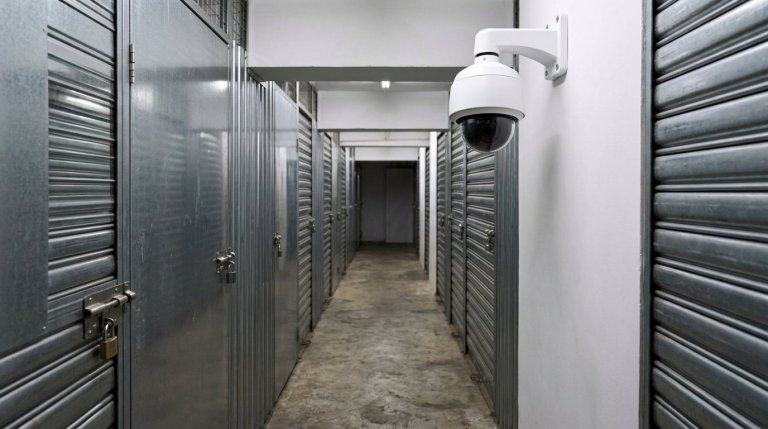
The environment and security are also worth including in your comparison. Find out whether the storage unit is air-conditioned, and take note of CCTV surveillance and access control arrangements. If you are storing clothing, documents or household items, the environmental conditions will affect how you plan your packing and collection; if you are storing goods, you will need to consider who can access the unit and how access cards are managed.Priorities vary depending on your specific needs.
The tenancy term and termination arrangements should be checked against your usage plans. If you are only storing items for a short period, confirm the minimum tenancy term, how the start date is calculated, and what procedures are required for renewal or termination.If you anticipate a longer storage period, you’ll need to understand how the terms of the tenancy are extended. By compiling a comparison sheet that includes dimensions, access arrangements, environmental conditions and tenancy duration, it will be easier to identify which option is best suited to your needs.
Finally, prioritise your requirements. If you’ll be collecting items frequently, prioritise access arrangements; if you’re mainly storing furniture, prioritise dimensions and layout; for documents or clothing, prioritise the environment and security.You can use the same checklist to record the conditions of each option in Kwun Tong item by item, then rank them according to your actual needs. This makes for a clearer comparison and ensures you do not base your decision on a single criterion alone.
Lucky Storage
Lucky Storage offers self-storage units and mini-offices, complete with a space calculator to help you organise your space requirements according to your actual needs. Whether you’re storing household items, furniture whilst your home is being refurbished, or stock for an online shop, first consider carefully which items need storing and which tasks require space, then choose the most suitable option.
If you have a wide variety of items, the space calculator can estimate the storage space required based on your list. You can organise household goods, documents and merchandise separately to ensure the space estimate better reflects your actual needs. For large items or more complex storage arrangements, you can also organise the characteristics of your items and then use this information to explore your storage options.
For workspace requirements, you might consider a mini-office. This differs in purpose from a self-storage unit: the former is designed to accommodate work arrangements, whilst the latter is used for storing items. If you need to organise stock and handle day-to-day work simultaneously, you should first distinguish between these two purposes, then plan your requirements based on your workflow and the nature of the items.
Lucky Storage’s self-storage units feature air-conditioned environments, CCTV surveillance and access control security. These facilities allow you to take both the environment and access management into account when planning your storage arrangements. When making your selection, you can prioritise the arrangements you’re most interested in based on the characteristics of your items and how you intend to use the space on a daily basis.
Before making an enquiry, it is advisable to note down your primary purpose, the categories of items you wish to store, and the specific spatial arrangements you’d like to explore. Based on this information, the Lucky Storage team can help you determine whether a self-storage unit, a mini-office or the size calculator best suits your needs. When you are ready, please feel free to contact Lucky Storage to discuss your space requirements in further detail.
Plan your next steps based on future needs
When renting a space, it is important to consider not only your current belongings but also your future lifestyle or business plans. Will you still need to store furniture after moving house? Might the volume of stock for your online shop change? By thinking through your intended use and potential changes in advance, you’ll be better prepared when making an enquiry, making it easier to select the most suitable option.
The Lucky Storage team is well-versed in the space requirements for self-storage units and mini-offices and can help you organise your enquiry.When enquiring about monthly mini-warehouse rentals, bring along an inventory list and your key questions to gradually identify the options that best suit your needs. When you’re ready to get started, please feel free to contact Lucky Storage to enquire about renting a unit and take a clear first step towards organising your space.