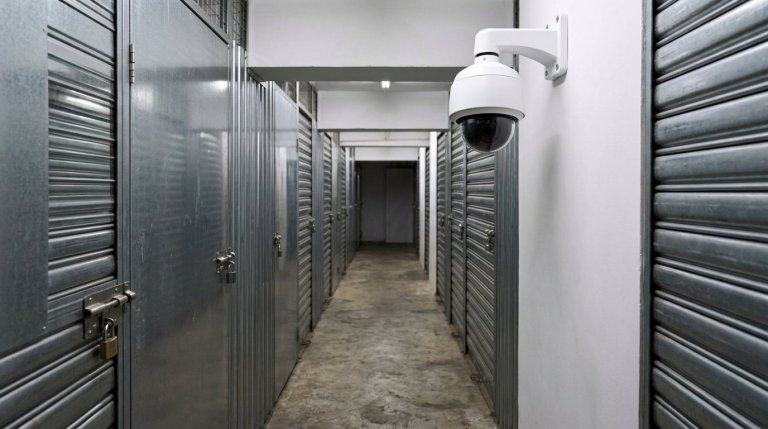

Just because a storage unit looks suitable doesn’t mean it will actually be convenient to use; before renting a self-storage unit, you should carry out an on-site inspection, paying attention to the location, access routes, loading and unloading arrangements, and fire safety facilities. During your visit, check the lighting and cleanliness inside the unit, and ensure that the clear width of the aisles between storage units is at least 1,050 millimetres.
What you need to consider goes beyond just the size of the unit; you should also think about whether moving in will be straightforward and whether retrieving your belongings later will be convenient. This article will explain the key points to check during an on-site inspection one by one, and guide you through how to enquire about rent, confirm the contract and arrange for moving in after your visit, so that you can make a decision based on your actual needs.
Key Points of the Article
- During your visit, pay attention to the lighting, aisles and cleanliness inside the storage facility, and observe whether moving items in and out is straightforward.
- Check the parking and loading/unloading arrangements based on your planned method of transport, and work out in advance how large items will be transported to the storage unit.
- Compile an inventory list before your visit, and enquire about suitable branches, storage unit sizes and rental rates to ensure your on-site assessment is well-informed.
- Before signing the contract, clarify the tenancy period, security deposit and storage procedures, and confirm arrangements such as access cards.
- During the visit, take note of fire zones, escape routes and the location of fire safety equipment to familiarise yourself with the storage facility’s safety provisions.
1. Storage unit lighting, access routes and cleanliness
When conducting an on-site inspection before renting a self-storage unit, start by walking from the entrance to your allocated unit, then return along the same route. This walk-through allows you to assess the lighting, aisles and floor conditions simultaneously.Do not simply stand at the reception area and take a quick look. Walk into the storage unit itself to check whether you can see clearly into the corners and deeper areas. If you intend to store cardboard boxes, documents or clothing, the ability to make out the labels on the boxes will affect how easy it is to retrieve your belongings later.
Check whether the lighting is obstructed by pillars, corners or door frames. Stand by the unit door, then walk further into the unit to see if there is sufficient light to clearly see the floor and the outer packaging of your items. If boxes are labelled for organisation, try to make out the text from the position where you would normally retrieve them.Also check for any variations in brightness or flickering in the lighting. These observations will help you determine whether it will be easy to locate items when organising your storage. Whilst a mobile phone torch can provide temporary additional light, it is no substitute for assessing the storage facility’s existing lighting.
Next, examine the aisles. The clear width of the aisles between storage units in Hong Kong mini-storage facilities must not be less than 1,050 millimetres. During your visit, check whether the aisles are obstructed by cardboard boxes, cleaning supplies or other items, and see if it is easy to navigate around corners.If you plan to store larger items of furniture, visualise the points where you will need to manoeuvre during delivery and check that the aisles are unobstructed. Do not limit your inspection to just the small area in front of the unit door; the entire route from the entrance to your storage unit will affect the manoeuvring space available when using a trolley or moving items.
It is also worth inspecting the floor and corners thoroughly. Walk slowly along the aisles, noting any scattered clutter, dust build-up, stains or obvious signs of damp. When you come across areas where cardboard boxes or fabric items are stored, check that the surrounding area is tidy and that there is a clear path to walk along on the floor.If there are pillars or recessed corners within the storage unit, check whether these are easy to keep clear and consider whether large boxes might obstruct the corners. Tidiness is not just about appearance; it also concerns your ability to store items properly and retrieve them easily.
During your visit, you can test the flow of movement using a practical example: suppose you need to retrieve a box of winter clothes. First, check that the label is clearly visible, then see if you can walk right up to the box and take it out without having to move any other items.If items need to be stacked, check whether there is still enough space to walk around once the boxes are in place. Assessing the lighting, access routes and cleanliness together provides a more accurate picture of day-to-day usability than simply judging the storage area’s size on its own.
Finally, make a note of what you observe. You can simply categorise your observations into lighting, aisles, flooring and corners, and note which areas require particular attention.If there are cleaning products or miscellaneous items on site, check whether they are positioned within the walkway; if there are stains on the floor, note their location and extent. By taking these specific observations into account when considering where to place your belongings, you will find it easier to judge whether the storage unit suits your organisation needs, rather than making a decision based solely on first impressions.
2. Parking and Loading/Unloading Facilities
The ease of loading and unloading will affect how you organise each visit to access your belongings. During your visit, walk from the building entrance to the storage facility, noting where vehicles can park and the route from the parking area to your storage unit. Do not just consider whether the entrance is convenient; corners, lifts and corridors may all affect the movement of large items.
Visualise the items you plan to store. If these are a few boxes of clothes or documents, focus on whether you can carry them into the unit one by one; if they include sofas, bookcases or large electrical appliances, check whether the passageways and corners are wide enough to accommodate them.During your visit, mention the approximate dimensions of your items and observe along the route for any narrow passages, thresholds or points where you’ll need to manoeuvre. These details provide a better indication of how smoothly the move-in will go than simply looking at the size of the warehouse door.
Also pay attention to the actual process once your vehicle has parked. Once you’ve unloaded the boxes from the boot, can you push them straight to the entrance? Do you need to pass through other entrances or communal corridors along the way? If you need to set items aside temporarily whilst moving them, check whether there is space on site that won’t obstruct passage.Do not assume that you will be able to park for long periods or leave items in the corridor; you should rely on the arrangements visible on site.
Check the lifts and doorways along the route. Will large items need to be turned or tilted to fit into the lift? Are the storage room doors, lift doors and corridor corners easy to navigate when entering and exiting? Use an actual item as an example—such as a tall wardrobe—and visualise the route it would take, step by step, from the vehicle to the storage unit.If multiple changes of direction are required during transport, this may increase both the manpower and time required.
Vehicle arrangements should also be tailored to your usage patterns. If an online shop or studio receives and dispatches goods in batches, consider whether the same route is used for each collection; for a concentrated move during a house move or renovation, consider furniture, boxes and electrical appliances separately.During your visit, describe the types of items one by one, then ask the staff on site to indicate feasible transport routes. This is a more effective way to obtain practical answers than simply asking, ‘Is there anywhere to park?’.
Before leaving, make a note of your observations: parking locations, access routes, lift connections and turning points for large items. If moving arrangements at different times of day might affect you, be sure to mention your anticipated usage scenarios.Finally, assess whether the facilities are suitable based on your actual items and routes; convenient parking does not necessarily mean convenient access to the storage unit – you must carefully consider both aspects.

3. Check branch locations and rental rates before your visit
Before setting off, decide which areas you wish to visit. When choosing a self-storage facility in Hong Kong, consider transport routes and daily travel arrangements in different areas; you can select the most convenient branch based on your home, office or renovation site.If you need to collect items on a regular basis, you should factor in the journey to and from the facility; if you’ll only be using it during a move, consider where the items will be collected from and where they’ll need to be taken afterwards.
When enquiring about branches, specify where you usually set off from and which mode of transport you tend to use. For example, will you be travelling there after work, or walking from your studio? Providing this context will help you assess in advance whether the branch’s location fits in with your daily routine.You may also note down the address and any easily recognisable landmarks nearby to help plan your route, so you do not have to search for the entrance at the last minute on the day of your visit.
Compile an inventory of your belongings before your visit. List items such as cardboard boxes, filing cabinets, clothing and large pieces of furniture, and indicate which items you need to access frequently. Simply saying ‘a few boxes of odds and ends’ does not accurately reflect your actual needs; for example, storing a desk alongside several boxes of documents requires a different arrangement to storing just cardboard boxes.The list can be used to explain your intended use and help focus the on-site visit.
If you wish to assess whether a storage unit is suitable, include the length, width and height of large items, as well as whether they can be dismantled or stacked. If you haven’t measured the dimensions, take photographs of the items first, or note down their approximate shape and category.This information will help you visualise how the space is used during your visit, avoiding the pitfall of estimating based solely on the number of boxes whilst overlooking the space taken up by furniture or electrical appliances.
When booking a viewing, you may also specify the key points you wish to check, such as the location of the entrance, the floor on which the storage unit is situated, or the route from the building entrance to the unit. If family members or colleagues need to be involved in the decision-making process, arranging for everyone to attend the viewing will allow you to discuss directly how items should be stored.If you have specific arrangements for a house move or renovation, you may also outline the anticipated storage scenario in advance, so that time can be set aside to inspect the relevant areas.
Finally, compile a single memo containing the branch address, your estimated arrival time, an inventory of your belongings and any specific queries you may have. Once there, check each item against the list to ensure the location is convenient, the storage unit’s layout meets your needs, and the on-site arrangements suit your access requirements.If you are considering different areas, note down the transport links and usage scenarios for each branch, then make your choice based on your day-to-day needs to ensure your visit has a clear focus.
4. Signing the Contract and Moving In After the Viewing
Once the tour is complete, first check the branch and storage unit details on the tenancy agreement to ensure they match the locations you actually viewed. Then review the rental dates, how the tenancy period is calculated, and the usage arrangements set out in the agreement. If the document’s contents differ from what you understood during the tour, clarify the discrepancies before deciding whether to sign.Do not rely solely on verbal recollections; ensure you read through the written documents item by item.
Next, consider how the tenancy period aligns with your needs.Generally, the minimum rental period for a self-storage unit is one month. If you only intend to store items for a short period, make a note of your anticipated start and end dates, and familiarise yourself with the procedures required to terminate the tenancy. If you may need to extend your tenancy, clarify the renewal arrangements and notice requirements to ensure they fit in with your moving, renovation or work plans.
Before signing, double-check that the intended use of the storage unit matches your inventory list.For example, if you originally intended to store cardboard boxes but later add bookcases or household appliances, you will need to reconsider how to arrange the items within the unit. Ensure that your belongings can be stored properly and leave space for future access. If there are any changes to the unit or usage arrangements, ensure that the lease agreement reflects your final decision.
Once the contract has been signed, familiarise yourself with the procedures before moving your belongings into the unit. After the tenant has taken up the lease and activated their access card, they may enter and exit their unit 24 hours a day.Before moving in, clarify how to activate and use the access card, as well as the procedures to follow when entering the unit. Coordinate the activation process with your estimated move-in time to avoid a situation where your belongings have arrived but the access arrangements have not yet been finalised.
Before moving in, sort your boxes by item category and write a summary of the contents on the outside of each box.Place frequently used items in easily accessible locations, whilst items used less often can be stored towards the back. If you have documents, clothing or household goods, labelling them separately will make them easier to identify. This simple list can also be kept as a reference for future retrieval, reducing the need to search through each box.
Once the move-in is complete, keep your tenancy agreement, storage unit details and access card arrangements in an easily accessible place, and make a note of the contact procedures required for terminating or renewing your tenancy. If you need to retrieve your belongings, first check the location of the boxes against your list, then unpack them step by step.Keep your contract details and day-to-day storage records organised; this will make future moves, access to your storage unit or moving out much more orderly.
5. Fire Zones, Escape Routes and Fire Safety Equipment
Fire safety provisions depend on the actual location. During your visit, first locate the emergency exits, then walk from your storage unit along the route to the exit.In Hong Kong self-storage facilities, the walking distance along an escape route must not exceed eighteen metres. Check that the route is clearly marked and not obstructed by cardboard boxes, trolleys or clutter. If your storage unit is at the end of a corridor, walking the route yourself will help you familiarise yourself with the direction of the exit.
Next, check the fire compartments. Observe the partitions between the storage units and the corridors, and ensure that doors and passageways remain unobstructed.Do not move or lean on fire safety equipment yourself, nor place items near exits. If you intend to store large pieces of furniture, visualise where they will be positioned once moved in to ensure they do not obstruct communal passageways or block exit signage.
As for fire safety equipment, check whether fire extinguishers, fire bells, alarms and emergency lighting are visible on site, and observe whether the area in front of them is obstructed. These are items you can identify during a tour, but this does not mean you can determine the condition of the equipment by visual inspection alone.If you are unsure of the location of these facilities, ask on-site staff directly where they are situated and the evacuation route to follow in the event of an alarm.
As of 30 June 2026, the Hong Kong Fire Services Department had conducted inspections at a cumulative total of 731 operational self-storage facilities; approximately 89 per cent were found to comply with current regulations. These figures are provided for background reference only and cannot replace your own observations of individual premises.During your visit, you should still check whether escape routes are clearly marked, whether there is sufficient clearance in front of fire safety equipment, and familiarise yourself with the relative positions of the storage areas and exits.
You can use a simple scenario to check the escape routes: imagine that an alarm sounds inside the facility; start from the entrance and walk along the corridor towards the exit. Along the way, check whether the directional signs are easy to recognise and whether you can still find your way after turning a corner.Also, check whether there are any obstructions near the exit and whether the area in front of the door is kept clear for passage. If you are visiting with others, you may also verify the route from both the entrance and the storage bay to avoid relying solely on a single direction.
Finally, make a note of the location of the exit, the layout of the corridors and the position of fire safety equipment, and clarify any queries you may have on the spot. These observations will help you understand the layout of the premises before making a decision, and will also serve as a reminder not to place items in the aisles or in front of equipment once you have moved in.If you are comparing storage units, you may enquire about self-storage rental arrangements and factor in fire escape routes when viewing the premises.
Lucky Storage
Lucky Storage can help you link your observations from the site visit to your actual space requirements. If you are still unsure about the size of the storage unit you need, you can use the size calculator to estimate based on your list of items; if you require workspace, you can also explore our mini-office options.
When making enquiries, it will be easier to discuss suitable arrangements if you have organised the types of items, the expected storage duration and your preferred area in advance. You may also bring up any issues regarding aisles, loading/unloading areas and fire safety facilities that you noted during your visit, so that we can address them one by one.
If you’d like to estimate the space required based on your inventory list, please feel free to contact Lucky Storage for further details.
Frequently Asked Questions
Should I bring an inventory list when visiting a self-storage facility?
We recommend first listing the items you plan to store, such as cardboard boxes, filing cabinets and furniture, and noting which items you will need to access frequently. This list will help you assess the layout on-site based on your actual needs, and make it easier to note down any details that still require clarification.
Can I decide on a storage unit based on photos alone?
Photographs provide a preliminary overview, but they cannot fully convey the complete route from the entrance to the storage unit, nor the actual atmosphere on site. If you have large items or specific access requirements, a personal visit will make it easier to assess the situation based on the size of your belongings and how you intend to use the space.
What should I do to organise my considerations if I haven’t made a decision after the visit?
Compile a single record of any unanswered questions, suitable storage unit options and your usage requirements. You can prioritise these based on how frequently you’ll need to access items and the types of items involved, then weigh up which arrangement best suits your needs on a case-by-case basis.