
For short-term storage of renovation and furniture items in Tsuen Wan, whether charges are based on the number of boxes or by volume depends mainly on whether the items can be packed into boxes and how much space large pieces of furniture take up;If the number of boxes is clear and the items consist mainly of cardboard boxes, you may wish to compare prices based on the number of boxes first; however, if you have large items such as sofas or bed frames, estimating by floor area will be more straightforward.
When arranging temporary storage during renovation, it is not just the quantity of furniture that matters, but also the warehouse environment, packing methods, removal arrangements and the scope of liability in the event of damage to items; the following section compares the two pricing methods, explains how to estimate the space required and outlines key considerations before storage, enabling you to make a choice based on your specific items and renovation schedule.
Key Points of the Article
- Understand which items are best suited to each method—per-box or per-area—and narrow down your options based on the shape and quantity of your furniture.
- When estimating the space taken up by large pieces of furniture, do not just look at the number of items; also consider their dimensions when disassembled and how they will be stacked.
- Master packing, disassembly and labelling techniques to minimise the hassle of searching for items whilst they are in storage.
- Pay attention to the warehouse environment, access control and security, as well as liability arrangements regarding your belongings during handling and storage.
- Use your inventory list to estimate the space required, then choose the most suitable temporary storage option based on the progress of your renovation.
Warehouse Security and Temperature and Humidity Control
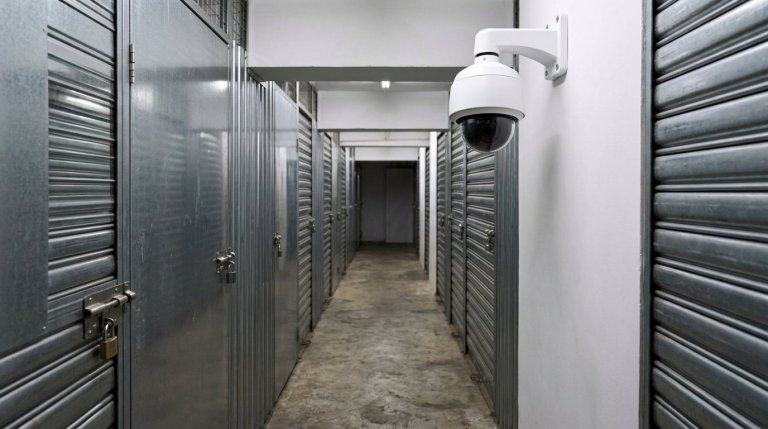
During renovation work, furniture may need to be stored in a warehouse for a period of time.Before storing your belongings, it is important to distinguish between security and environmental considerations. CCTV primarily monitors communal areas, whilst access control manages entry and exit; the two serve different purposes. You should first familiarise yourself with how access points are controlled and how tenants gain entry to their own storage units. If access cards are used, you should also be aware of the entry and exit arrangements once they are activated.
Security is not merely a matter of whether CCTV cameras are present. Practical arrangements also include access control, monitoring of communal areas, and the physical separation of different tenants’ storage spaces.Before moving in your furniture, make a separate record of valuable items, furniture prone to scratches and general odds and ends. Taking photographs of the items’ appearance and keeping an inventory will help you organise your storage later on. The inventory need not be complicated; simply note the item names and their distinguishing features.
In terms of the environment, air conditioning and humidity control are not one and the same. Air conditioning regulates the indoor temperature, but one should not assume that humidity is also maintained at a stable level as a result.Wooden furniture, fabric sofas and mattresses are all affected differently by damp conditions. Before storage, ensure the furniture is completely dry, then cover it with breathable protective material. If you wrap furniture that is still damp in plastic film, moisture may become trapped inside the packaging, making it even more difficult to keep the surface dry.
When reviewing warehouse details, pay close attention to descriptions of the actual environment. You should assess separately whether the warehouse is air-conditioned, whether there is CCTV in communal areas, and whether access control is in place at entrances and exits.Do not assume that ‘air-conditioned’ automatically means constant temperature and humidity, nor should the number of CCTV cameras be taken as the sole measure of the storage provider’s responsibility. If there is dust from building works, wipe the surfaces clean before wrapping the furniture; if you need to retrieve items during storage, keep frequently used items in easily accessible locations.
| Arrangement Options | Access Control | Monitoring of Common Areas | Environmental Considerations |
|---|---|---|---|
| Install access control and CCTV | Monitor tenant access | Understand the CCTV coverage area | Also check air-conditioning and humidity arrangements |
| Lock-only arrangements | Confirm how to use the keys or door locks | Understand how communal areas are managed | Do not assume that the indoor environment is climate-controlled |
| In air-conditioned environments | You must still be aware of access arrangements | You must still be aware of security in public areas | Distinguish between air conditioning and humidity control |
When making your choice, first assess the environment based on the furniture’s materials and intended storage duration, then compare options according to your requirements for ease of access and security arrangements. For short-term furniture storage whilst renovating in Tsuen Wan, checking these points one by one is more practical than simply looking at the name of a single facility.
Estimating storage space for large items of furniture
To estimate the space required for large items of furniture, start by measuring their dimensions. Note down the length, width and height of each item. For sofas, measure the outermost part of the armrests. For wardrobes, measure at the position of the door handles.For bed frames, measure the bed base and headboard separately. When taking measurements, ensure you include the actual outer dimensions rather than simply copying the dimensions stated on the product label. Before moving out for renovation, compile a single list containing both the dimensions and the names of the items; this will make subsequent arrangements much clearer.
Next, determine whether items can be dismantled. Bed frames, dining tables and some wardrobes are easier to arrange when taken apart; however, for one-piece sofas, you’ll need to estimate based on their complete dimensions.Dismantling does not necessarily mean a reduction in floor space; you must also factor in the space required for stacking parts and protective packaging. Screws, shelves and fittings should be stored together and labelled with the piece of furniture they belong to, to prevent them from becoming scattered or difficult to identify during storage.
When estimating space, do not simply add up the floor area. The height, shape and orientation of items also affect the actual space required. You can start by planning the position of the largest piece of furniture, then arrange smaller items to fill in the gaps.Never place heavy objects on top of fabric sofas or mattresses, and do not allow removable parts to block access to stored items. If you need to retrieve tools or furniture whilst the renovation is in progress, it will be more convenient to leave a clear access route.
As a guide, a space of approximately twelve square feet can accommodate a two-seater sofa and several suitcases. This is merely an example and does not mean that all types of sofas can be arranged in this way. The thickness of the sofa arms, the height of the backrest, the size of the suitcases, and whether items can be stacked will all affect the space required.After making a preliminary estimate based on this example, check each item against your own list to avoid relying solely on the number of items.
- Record the external dimensions of each piece of large furniture.
- Mark any detachable parts and items that cannot be placed upside down.
- List small items such as suitcases and cardboard boxes separately.
- Arrange items in the order they will be stored, placing frequently used items near the entrance.
Finally, divide the list into three categories: ‘large furniture’, ‘dismantlable parts’ and ‘boxed items’. This makes it easier to see which pieces of furniture take up the most space and allows you to spot any omissions—such as chair legs, headboards or protective packaging—at an early stage.When estimating the temporary storage of furniture during a renovation in Tsuen Wan, dimensions, disassembly methods and collection arrangements must all be taken into account; simply counting the number of furniture items is insufficient.

Tips for packing, dismantling furniture and labelling items
Start the packing process by sorting items. Group them by room and purpose, such as kitchenware, books and bedding. Keep fragile items separate. Label each box clearly with its contents and original location. This will make it quicker to locate everyday items once the renovation is complete, and you won’t need to unpack every box individually.
The size of the cardboard boxes should be appropriate for the items. You may refer to standard postal boxes measuring 600 mm in length, 400 mm in width and 360 mm in height. Do not overfill the boxes; the recommended maximum weight is 20 kg.Books and tools are relatively heavy and should be packed in separate boxes to avoid excessive strain on the base when lifted. Lightweight clothing can be packed in the same box as other light items, but ensure any gaps are filled to minimise movement within the box.
Wrap each fragile item individually. Plates and bowls should be placed upright in the box, with any gaps filled with cushioning material.Glass surfaces, mirror frames and table corners should first be wrapped in soft material, then secured with rigid corner protectors. Ensure items are dry before packing to prevent moisture from being trapped inside the plastic wrap. Mark the outer box with ‘Fragile’ and indicate which side should face upwards to make it easier to identify during handling.
When dismantling furniture, take photographs of the original appearance and the joints first. For removable parts such as bed frames and dining tables, place screws and small fittings into sealed bags, then label them with the corresponding furniture name. Stack shelves in their original order, separating them with protective material.Avoid mixing parts from different pieces of furniture in the same bag, as this will otherwise make it time-consuming to match them up piece by piece when reassembling.
- Labels should clearly state the room, the item and any ‘fragile’ warnings.
- Keep frequently used items separate and mark them as ‘priority’.
- Attach the bags containing screws next to the corresponding pieces of furniture to prevent them from getting lost.
- If there is any empty space inside a box, use packing material to secure the contents.
Labels should be affixed to the side of the box, not just the top. Once stacked, the sides are usually still visible. Use brief descriptions, such as ‘Living Room’, ‘Tea Set’ or ‘Fragile’, followed by the box number; keep a list of box numbers and contents to make it easier to locate items when you need them.Careful packing improves space utilisation, increasing the efficiency of temporary storage during renovation by over 30 per cent. For short-term furniture storage whilst renovating in Tsuen Wan, ensuring items are sorted, protected and labelled properly makes both moving in and collecting them much more organised.
Choose storage by the box or by volume
Charging by the box is suitable for items that are already packed and where the number of boxes is easy to count, such as clothes, books and kitchenware.You can organise your belongings first, then record the number and size of the boxes. If you only need to store cardboard boxes whilst your home is being refurbished, this method makes it easier to keep track of the total volume of items; however, large items of furniture such as sofas and bed frames cannot be estimated based on box count alone.
Charging by floor area is more suitable for a mix of cardboard boxes and large furniture.When estimating, you must take into account the outer dimensions of the furniture, any dismantled parts, packaging materials and the location where items will be retrieved. For example, if there are several boxes of miscellaneous items next to a sofa, the space required is not just the sofa’s footprint; it also depends on how the boxes are arranged and whether you need to leave a clear passageway.
The key points of comparison between the two methods are as follows:
| Comparison Criteria | By number of boxes | By area |
|---|---|---|
| Suitable items | Boxed items of similar dimensions | A mix of large furniture and boxes |
| Basis for estimation | Number of boxes and box dimensions | Furniture dimensions, stacking method and access routes |
| Easily overlooked | Large items are not counted towards the total number of boxes | Items that still take up space even after being dismantled and packed |
| Arrangements for collection | Locate items by their box labels | Set aside space for frequently used items |
If you only have cardboard boxes, start by counting the number of boxes; if you have sofas, dining tables or bed frames, measure their dimensions first, then estimate the space required by area for greater clarity.Even if you’re only storing items for a month, it’s worth comparing monthly-rate storage options based on floor area. Before making a choice, draw up a sequence for retrieving your belongings once the renovation is complete, to avoid discovering that frequently used boxes are blocked by furniture once everything has been stacked away.
A simple approach: for items packed in boxes, organise by box; for large pieces of furniture, store them mixed together and plan by floor area. If you have both types of items, first note down the number of boxes and the dimensions of the furniture separately, then compare which calculation method more accurately reflects the actual space occupied.Estimating your short-term storage needs during a renovation in Tsuen Wan in this way provides a more reliable basis than simply counting the number of items.
Responsibilities and Risks Associated with Removal and Storage
First, distinguish between two distinct processes: moving out of the property and transporting items to the warehouse, which fall under the remit of the removal arrangements; and the management of items whilst they are in storage. These may be handled by different parties, so one should not assume that a storage service automatically includes a door-to-door removal service.Before booking, clearly set out the party responsible for each stage, the scope of service and the handover location, to avoid disputes over which party is liable should furniture become damaged.
Before handover, document the condition of your furniture. Take photographs of areas prone to scratches, such as sofa armrests, the corners of dining tables, cupboard doors and glass surfaces; ensure any existing cracks or stains are clearly captured.Note the name of the item and its visual condition next to each photograph, so you have a reference point before and after the move. If a bed frame is dismantled into several parts, record these alongside the parts bag to prevent components from being lost or mixed up.
When arranging the move, check the contents item by item. Whether large pieces of furniture need to be dismantled, whether there are any tight corners along the route, and whether items require extra wrapping will all affect how they are handled. Specify your requirements in the arrangements, for example, ‘The glass coffee table must be wrapped separately’ or‘Ensure no shelves are left out of the wardrobe’. Verbal instructions are easily forgotten, whereas a written checklist makes it easier to cross-check each item during handover.
As for the storage terms and conditions, ensure you clearly understand the boundaries of liability. Take note of which items may be stored, who is responsible for moving them into the storage unit, how tenants can retrieve their belongings, and the procedure for reporting any damage. Confirm that the scope of cover extends to both the removal and storage phases; do not assume that the liability arrangements for one phase apply to the other.For items made of different materials, such as wooden cupboards and fabric sofas, also record their condition and packaging method prior to storage.
- List the name of each piece of furniture and each box.
- Take photographs of the external appearance and any pre-existing damage before storage.
- Record the respective areas of responsibility for the moving and storage processes.
- Retain the handover checklist and relevant records.
If the removal and storage arrangements are separate, please ensure that the handover times and itemised lists for both are synchronised. Sofas, bed frames and cardboard boxes listed on the inventory should be checked off one by one against the actual items handed over. This clarifies the lines of responsibility and facilitates the retrieval of items once the renovation is complete.When organising short-term storage for furniture during a renovation in Tsuen Wan, first prepare an inventory list, photographs of the items’ condition and handover records, then confirm responsibilities for each stage in accordance with the storage arrangements.
Lucky Storage
Lucky Storage offers a space calculator that allows you to estimate the space required based on your inventory list, making it easier to organise furniture and miscellaneous items for temporary storage during renovation.Include large items such as sofas, bed frames and wardrobes on the list, along with the number of cardboard boxes. This ensures the estimate does not rely solely on the number of boxes, thereby avoiding the omission of bulky furniture. It is advisable to carry out this step before arranging storage, so that you can first get a clear picture of the combination of items and then consider the most suitable space.
The calculator provides recommended ranges from one square foot to over 130 square feet.You can enter items one by one, using the dimensions of large pieces of furniture as a reference; if you plan to retrieve your belongings in batches after the renovation, you can also clearly mark frequently used items to ensure they are easily accessible. Actual requirements will still need to be calculated based on the quantity, size and arrangement of your belongings.
Regarding tenancy periods, the minimum rental term for a standard self-storage unit is generally one month, making it suitable for short-term transitional periods during renovation works. Once you have rented the unit and activated your access card, you may access your unit 24 hours a day; should you need to retrieve tools or furniture during the renovation period, this arrangement allows you to plan your collection times as required.The storage facility is air-conditioned and features CCTV surveillance and access control, allowing you to take both the storage environment and access management into account.
When preparing your enquiry, compiling a list of your belongings, furniture dimensions and the estimated storage duration will help ensure that the space quoted is as close as possible to your actual needs.You may also wish to sort out which items you will need access to during the renovation and which can be left until the work is complete. If you also require workspace, Lucky Storage offers mini-office options, allowing you to consider your living and working arrangements separately.
When organising short-term storage for furniture during renovation in Tsuen Wan, it is best to proceed step by step – from estimating space requirements and organising your belongings to planning the expected rental period – to ensure a clear process. You can contact Lucky Storage with your inventory list and dimensions to explore storage solutions that suit your needs.
Frequently Asked Questions
What should I do if the renovation schedule is delayed?
First, update your estimated completion date, then reorganise your list based on the items you still cannot move back home. If only some furniture remains to be stored, you can re-estimate the space required to avoid basing your needs on the original quantity when the entire house was cleared out.
My furniture is irregularly shaped – how should I provide the measurements?
Record the outer dimensions (length, width and height), and note any protruding parts or sections that cannot be dismantled. If the furniture can be dismantled, list the dimensions of each component separately to ensure the space estimate more accurately reflects the actual shape.
How should I arrange to retrieve items whilst they are in storage?
Make a list in advance of items you may need during the renovation, and indicate their purpose and the order in which you wish to access them on the list. When arranging storage, place these items in easily accessible locations to minimise the need to move other furniture.