To make the most of a mini-storage unit for household storage, organise your storage and retrieval sequence and categorise your belongings before moving them in. Plan your drop-off and collection times in advance, pack items into boxes by category and label them; keep frequently used items close to the unit entrance, and ensure that clothes prone to damp are completely dry before storing them.Security arrangements and prohibited items must also be handled in accordance with the storage facility’s regulations.
With limited space at home, an accumulation of clutter can mean rummaging through boxes just to find seasonal clothing or household items. This article outlines considerations regarding access and security, prohibited items, pre-storage organisation methods, as well as daily storage, damp prevention and cleaning arrangements, to help you free up space in your home in a more organised manner.
Key Points
- First, factor in the times for dropping off and collecting items into your schedule, then plan the layout of your belongings; this will make future access and retrieval much smoother.
- Before packing, familiarise yourself with the storage unit’s prohibited items and usage restrictions to avoid bringing unsuitable items into the unit.
- Start by clearing out expired, unwanted or damaged items to free up space for the household goods you genuinely wish to keep.
- Sort items into boxes by category and label them; place frequently used items near the storage unit door and heavier boxes on the bottom shelves to ensure a more organised system for retrieving and stacking items.
- Ensure items prone to mould, such as textiles, are kept dry before storage, and organise and clean the contents of your storage unit regularly.
1. 24-hour access and security facilities
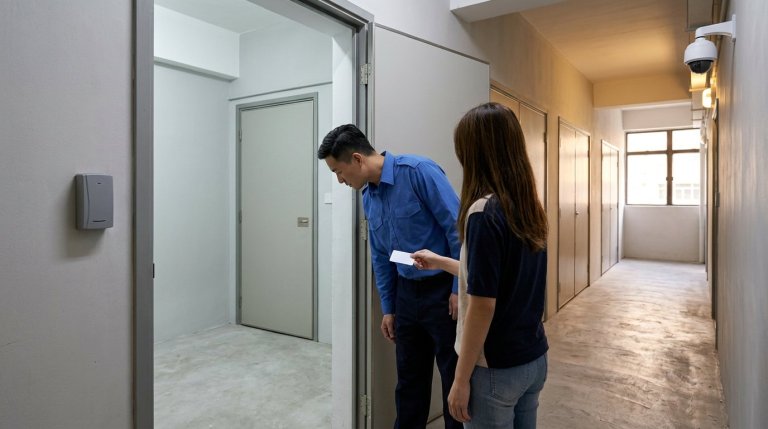
Does ‘24-hour access’ mean you can enter and exit at any time? You must check the actual arrangements carefully. This term only implies that items can be retrieved at night if the tenancy agreement permits access around the clock.Before moving items into storage, carefully check the access times, entrance locations and entry procedures one by one. If family members finish work late, you should factor in the possibility of retrieving items at night; if you only plan to visit during the day, the key is to arrange your access times in advance to avoid having to rush at the last minute.
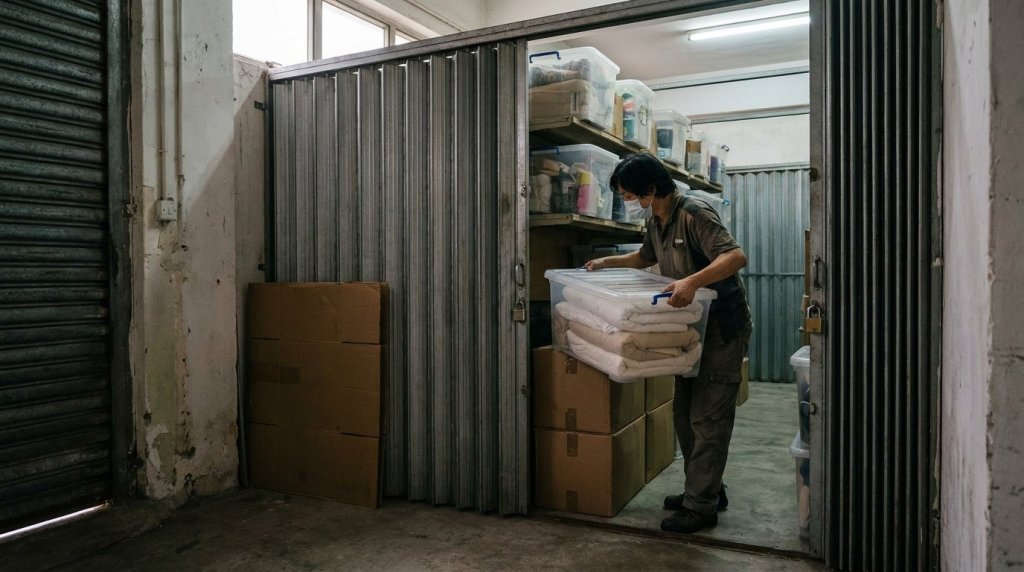
Plan your storage and collection times in advance. Moving in furniture, organising boxes and retrieving individual items all take different amounts of time. You might start by noting down your estimated move-in date, the days you’ll need to collect items, and what you’ll be dealing with on each occasion.Example: If you need to retrieve your winter duvet when the seasons change, schedule this collection during a time slot you have already set aside before moving your belongings into storage, and place the relevant boxes in an easily accessible location. This way, you won’t have to rummage through or move other items at short notice once you’re inside the storage facility.
Security arrangements should be considered separately for the entrance, access corridors and storage unit doors. Is there access control at the entrance? Can visitors enter the storage floor unaided? Do the Hong Kong self-storage rental terms specify access procedures? These are practical issues that affect access and retrieval. Closed-circuit television (CCTV), access control systems and access logs are factors to consider when comparing facilities.Arrangements may vary between facilities; you should rely on what is specified on-site and in the terms and conditions of tenancy, rather than making judgements based solely on the phrase ‘security provided’.
As for the storage unit door itself, pay attention to who is responsible for the lock, how it is secured, and the procedure for dealing with lost keys. When using a personal combination or key, avoid writing the details on the outside of the box, and do not stick the combination near the storage unit door.If a family member needs to collect items on your behalf, arrange in advance who is authorised to enter the storage unit, how keys or access details will be handed over, and ensure these details are not passed around casually amongst multiple people. A clear handover procedure is more secure than simply passing on a combination to relatives or friends at short notice.
Each time you enter or leave the storage unit, use your mobile phone to note the date, the items taken out or put in, and whether the door has been locked properly. This simple record helps family members keep track of where items are and makes it easier to spot discrepancies in quantity or location. If you notice that the lock is damaged or the door does not close properly, stop storing items immediately and follow the procedures outlined in your tenancy agreement.Only by planning your access times, entry and exit procedures, and personal storage habits together can you ensure that both convenience and security are incorporated into your household storage arrangements.
2. Prohibited Items and Usage Restrictions
Before packing, make a clear distinction between items that are ‘unsuitable for storage’ and those that are ‘expressly prohibited’ by the storage facility. Terms of use may vary between storage units, so always refer to the restrictions listed in your tenancy agreement.Do not simply move items into storage based on what friends or family say is acceptable. Draw up a list of items intended for storage and check them against the terms and conditions one by one; for example, if you have cleaning products, food or electrical appliances at home, first confirm whether they are suitable for long-term storage.
First, remove any items that may leak, emit odours or are prone to spoilage. Opened cleaning products, unsealed food and damp clothes may stain neighbouring items and make future organisation more difficult. If bottles are cracked or food packaging is damaged, do not store them alongside cardboard boxes or fabric furniture.When organising your kitchen cupboards, dispose of any out-of-date food straight away, keeping only items that are in their original, unopened packaging, dry and genuinely worth keeping.
Some items may not be explicitly prohibited, but you should still consider the risks involved in storing them. For flammable liquids, gas cylinders or battery-powered equipment, check the terms and conditions of your storage contract first; do not simply assume they can be stored in the unit. Large electrical appliances must also be emptied of their contents beforehand to ensure there is no standing water or residue.Example: If a fridge still contains food or moisture, it should be cleaned out and left to dry thoroughly before moving, to prevent odours or liquid from soiling the cardboard boxes.
As for valuables and important documents, you should assess whether they are suitable for storage in a self-storage unit. Passports, contracts, cash, jewellery and essential medication all have different access requirements; if documents need to be consulted frequently, it may be more convenient to keep them in a fixed location at home.For fragile items, wrap them securely in protective material first, then place them in the box to fill any gaps, and mark the outside of the box with ‘Handle with Care’. Do not place heavy items on top of boxes containing fragile items.
Before storing items, carry out a simple check: first, draw up a list by category of items; second, review the terms and conditions regarding prohibited items and usage restrictions; third, check the containers for damage, leaks or unpleasant odours;fourthly, set aside any items unsuitable for long-term storage. If you are unsure about the nature of an item, do not mix it with other boxes for the time being. Organising your belongings in this way reduces the likelihood of discovering unsuitable items after they have been moved in and having to remove them, whilst also making subsequent sorting much clearer.
3. Clear out unwanted items before storage
Reduce the volume of your belongings before moving into storage to avoid transferring household clutter into the storage unit as it is. Expired, unwanted or damaged items will take up space that could otherwise be reserved for frequently used household goods. Start by organising one cupboard at a time; for example, clear out the living room cupboard first, then decide which items are worth keeping.Tackling one area at a time makes it easier to decide what to do than if you were to pile everything from the whole house onto the floor in one go.
Each item can be categorised into one of three groups: ‘Keep’, ‘Dispose of’ and ‘Decide Later’. Items to be kept should have a clear purpose, such as a coat you’ll wear next season; items that are damaged, missing parts or have been unused for a long time should be placed in the ‘Dispose of’ pile.As for keepsakes you’re not quite sure about, set them aside separately to look at later. Don’t pack undecided items straight into boxes, otherwise you’ll simply be storing your indecision along with them.
You can sort through your wardrobe by clothing category. Pick up coats, bed linen and curtains one by one to check whether they fit properly, are in one piece, and consider when you might use them again.Clothes that no longer fit, bed linen with holes, and curtains missing their fittings may not be worth taking up storage space. In the kitchen, check the use-by dates, condition of the packaging and frequency of use for food and household items; remove any out-of-date food and empty bottles first, and only add unopened items that you will continue to use to your list of things to keep.
For damaged items, you must also determine whether they are worth repairing. For chairs with loose parts or light fittings missing components, first assess whether they can realistically be repaired before deciding whether to keep them. If you are keeping something simply because it ‘might be useful’, but cannot specify a purpose or when you would use it, you should reconsider.Example: Old electrical appliances that have not been used for years—if they are missing parts or no longer work—will not become usable again simply by being stored in a storage unit.
Once you have cleared everything out, draw up a list of the items you are keeping, categorised by purpose, such as ‘seasonal clothing’, ‘bedding’ and ‘small electrical appliances’. Then check each item against the list to ensure that nothing marked as ‘keep’ has actually been discarded, or that any items you have already decided to get rid of have been packed away by mistake.If the whole family is sorting together, let the owner of the item have the final say, particularly when it comes to photographs, mementos and children’s old toys. Only once you have clearly decided what to keep and what to discard should you begin packing; this ensures you reserve space for the items you genuinely wish to keep and will be able to find again in the future.
4. Everyday household organisation and freeing up space
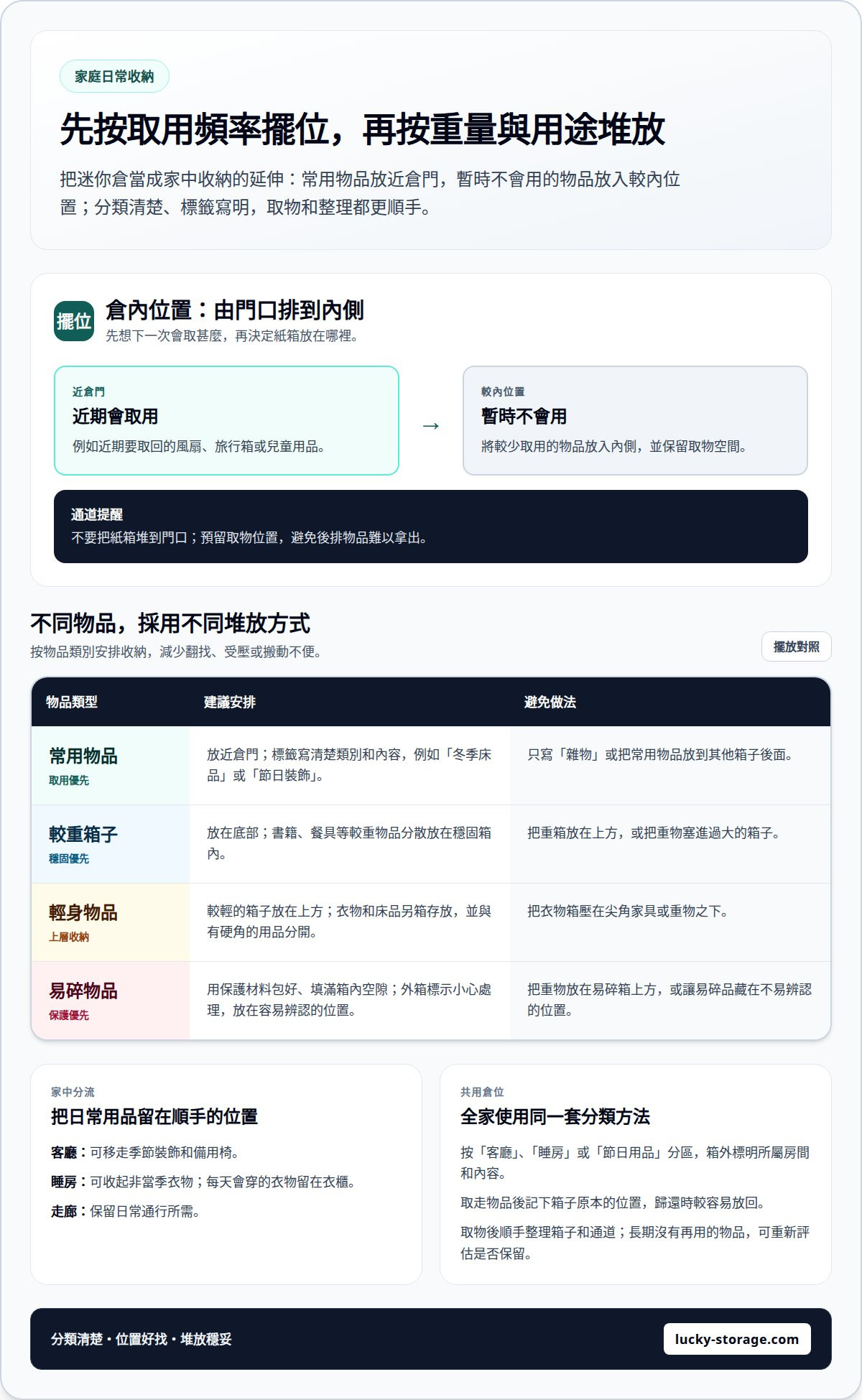
Treat the mini-storage unit as an extension of your home’s storage space, and organise items by how often they are used. Seasonal clothing, spare bed linen and festive decorations can be packed into separate boxes; label each box with its category and contents so that, when you need your winter duvet later on, you won’t have to open every box.Labelling boxes clearly as ‘winter bedding’ or ‘festive decorations’ is far more practical than simply writing ‘miscellaneous’. Keep the clothes and items you use daily at home, and avoid storing frequently used items just to free up space.
When organising your family’s storage unit, first consider what you’ll need to retrieve next. If you’ll be needing a fan, a suitcase or children’s items soon, place the relevant boxes near the unit door;whilst items you won’t be using for the time being can be placed further inside. When arranging your belongings, leave enough space to access them; avoid piling boxes right up to the door, as this makes it difficult to retrieve items from the back rows. Writing down the order in which you’ll need to retrieve items in a mobile phone note app can also help family members know which boxes to fetch first.
When stacking, place heavier boxes at the bottom and lighter ones on top to minimise the risk of heavy items falling or crushing other contents. Heavier items such as books and crockery should be distributed across sturdy boxes rather than crammed into oversized ones, as this makes them harder to move.Clothes and bedding should be packed in separate boxes, kept apart from items with sharp corners. Boxes containing fragile items should also be kept in easily identifiable locations to prevent them from being crushed when other boxes are moved later.
To free up space in your home, start by selecting one living area to organise. In the living room, remove seasonal decorations and spare chairs; in the bedroom, put away out-of-season clothing; and in the hallway, keep only what is necessary for daily passage.Each time you remove a category of items, check whether the remaining storage spaces in your home are more convenient; for example, leave the coats you wear every day in the wardrobe, whilst storing thick duvets and spare pillows in one central location. This ensures that clearing out cupboards does not end up making it more inconvenient to access everyday items.
When family members share storage space, agree on a consistent system for categorising items. You could organise by ‘living room’, ‘bedroom’ or ‘festive items’, and label the outside of each box with the room it belongs to and its contents. When a family member takes an item, make a note of the box’s original location so it can be easily returned to its place.Tidy up the boxes and clear the aisles each time you retrieve an item; if a particular type of item has not been used for a long time, you may also want to reassess whether it is still necessary to keep it. By ensuring your family’s self-storage units align with your daily retrieval habits, you can reserve space in your home for truly useful everyday purposes.
5. Constant Temperature and Humidity, Moisture Protection and Cleanliness Management
As Hong Kong’s climate is humid, ensure that clothes, bedding and curtains are completely dry before storing them. Freshly washed bed linen should be left to air-dry thoroughly; do not fold and pack it away whilst it still feels damp to the touch.Coats brought in on rainy days should also be hung up in a well-ventilated area until they are completely dry before being stored away. If textiles are damp when stored for long periods, they are prone to developing a musty odour, which may also affect other items in the same box.
Inspect the inside and outside of containers before storage. Cardboard boxes must be clean and intact, with no water stains or unpleasant odours on the base; reusable plastic boxes should also be wiped clean and left to dry.When packing clothes and bedding, avoid sealing items directly into boxes if they have just been washed and are not yet completely dry. If the box contains fabric items, you may write the category and storage date on the label so that you know which box to check first when retrieving your belongings later.
Cleaning should begin with the items themselves. Wipe dust from furniture surfaces first, then ensure there is no debris in the joints or drawers; shoes must be left to dry after cleaning and must not be stored whilst still containing mud, sand or moisture.Cutlery and kitchenware should be washed and thoroughly dried before being placed in lidded storage containers. These steps help minimise stains, odours and residue left in the storage unit, whilst also making it easier to access items directly in the future.
When stacking, ensure cardboard boxes remain stable and avoid placing boxes of clothing beneath furniture with sharp corners or heavy objects. For furniture, empty the drawers first, remove any dust from the surfaces, and then cover them using suitable protective measures; do not wrap furniture in fabric whilst it is damp.Leave space between boxes to allow for easy inspection of labels and retrieval of items. If you notice that a box has become damp, soft or has water stains, remove the contents for inspection and transfer them to a dry container.
Each time you enter the storage facility to retrieve items, take the opportunity to check the bottoms of boxes, furniture surfaces and the surrounding floor for any damp marks, dust or unpleasant odours. After removing a box of clothes, check that the fabric is dry before deciding whether to put it back.Cleaning tools should also be kept clean and dry; avoid sealing boxes immediately after wiping them with a damp cloth. Incorporating drying, cleaning and regular checks into your storage routine will help keep your clothes, furniture and household items in better order.
Lucky Storage: Self-Storage
Lucky Storage’s space calculator can help you estimate the storage space required based on the type and approximate quantity of your items. Once you have organised your furniture, boxes and seasonal items into a list, you can use the calculator for preliminary planning before arranging storage according to your actual layout needs. If you also require a dedicated workspace, a mini-office is another option.
If you have prepared an inventory list or would like advice on suitable space planning, please feel free to contact Lucky Storage for enquiries.
From a one-off tidy-up to a lasting habit
Home organisation doesn’t have to be perfect from the outset. Start by choosing the area of your home that most often feels cramped, assign a fixed place for each item, and then adjust the arrangement as your family’s needs change.Adding furniture, children growing up or changes to your daily routine may render your original arrangements no longer suitable. Treat your family storage unit as part of your home planning; regularly review whether the items you’ve stored are still of use, and your space will continue to adapt to your daily life.
If you’re considering arranging extra space for your household belongings, explore suitable options based on your actual needs. Contact Lucky Storage for enquiries to find a clear direction for your next step in organisation, and gradually create a more comfortable living space.