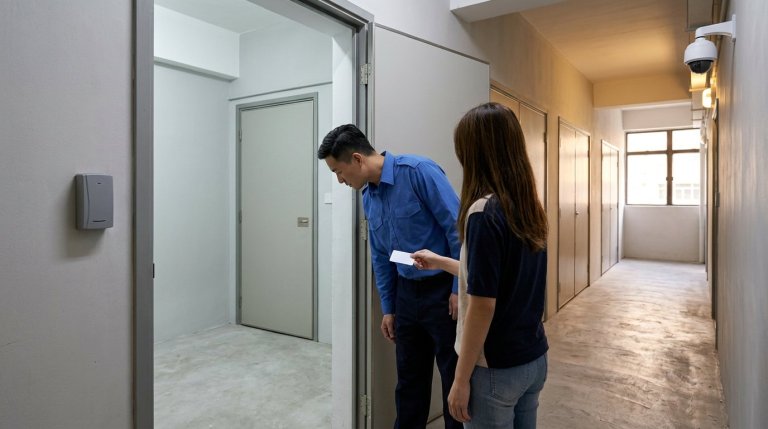
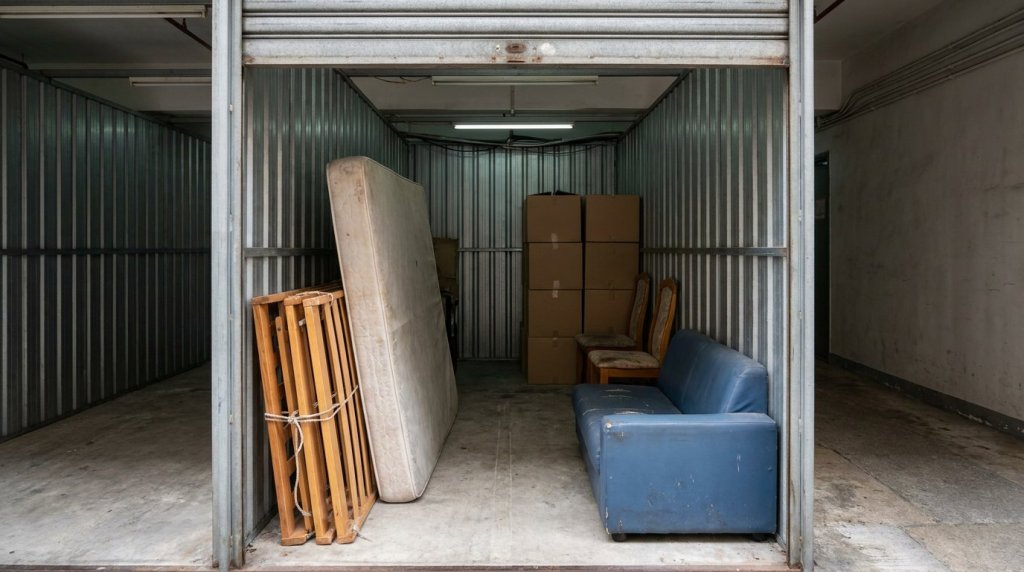
When using a mini-storage unit for a house move, arrangements must be made to coincide with the move-out, move-in and the quantity of furniture; the size of the storage unit and the rental period should be planned according to the actual schedule. By first listing the furniture that needs to be stored temporarily, and then arranging the rental period based on the expected collection date, it is easier to avoid running out of space or storing items for too long.
There is a great deal to deal with before and after a move, and if furniture cannot be moved into your new home straight away, this can certainly make arrangements more tight-knit. This article will guide you on how to estimate the storage space required based on the quantity of items, and organise the sequence of storage and collection according to your moving dates.
From large pieces of furniture and everyday items to things you won’t need in the short term, the following section explains step-by-step how to organise items in batches, keep access routes clear, and arrange your storage period to align with your moving schedule, ensuring a more organised transition.
Key Points of the Article
- First, draw up a list based on the type and quantity of furniture, then estimate the storage space required to avoid choosing a storage unit based solely on a hunch.
- Arrange large furniture and frequently used items separately, and leave access routes clear to make future collection easier.
- Coordinate the storage dates with the move-out, move-in and renovation schedules, allowing for a buffer to minimise the stress caused by changes to the relocation timetable.
- The length of the rental period can be arranged according to when items can be moved into your new home; if the move-in date is not yet fixed, you should factor in the possibility of delays when planning.
- Use a space calculator to assess your storage requirements; this will help you plan your temporary furniture storage arrangements more clearly.
Self-Storage for Moving
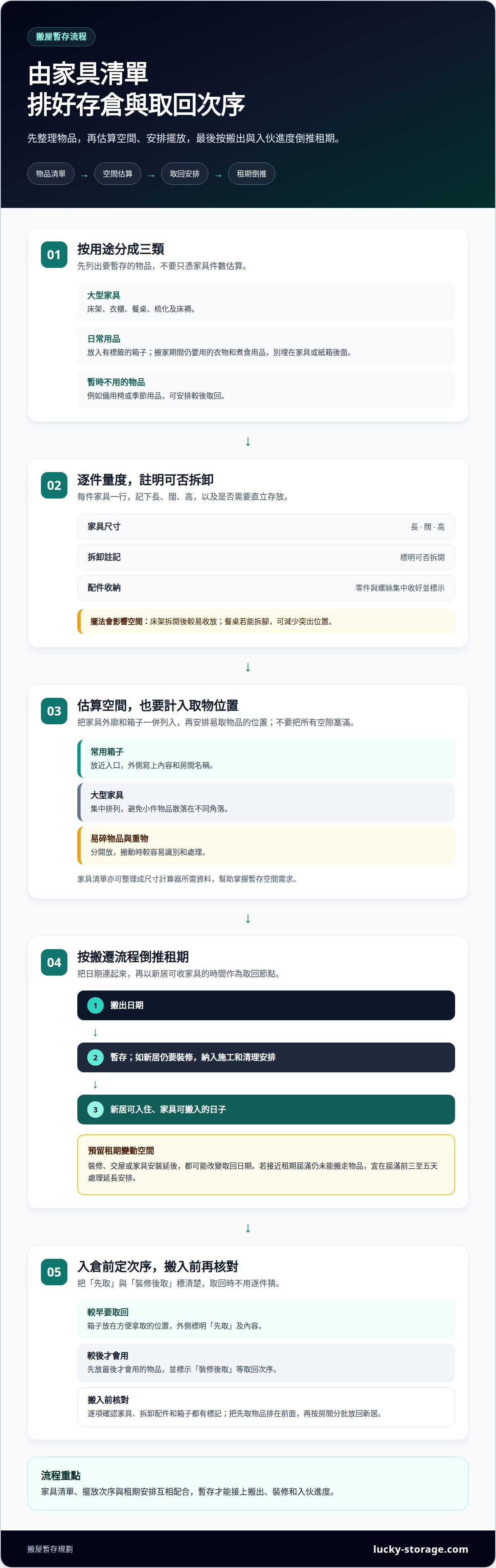
As your move-out date and move-in date may not coincide, you’ll need a temporary place to store your furniture. When arranging a self-storage unit for your move, first decide what items you’ll be storing, then estimate the space required and the rental period. Don’t just count the number of items. Even for the same sofa, whether it can be dismantled or stacked will affect how it’s arranged.
The first step is to categorise your belongings into three groups based on their use: large furniture, everyday essentials and items you won’t be using for the time being. Large furniture includes bed frames, wardrobes and dining tables; everyday essentials can be packed into labelled boxes.For example, clothes and cooking utensils that you’ll still need during the move should not be buried at the back of wardrobes or in boxes.
Step two: note down the length, width and height of each piece of furniture, and indicate which items can be dismantled. Once a bed frame has been dismantled, keep the parts together in one place; if a dining table’s legs can be removed, this will minimise the space it takes up. The dimensions list need not be complicated: one line per item, with a note on whether it needs to be stored upright, will make your estimates clearer.
When estimating space, in addition to the furniture itself, you must also factor in the boxes and where items will be retrieved from. Sketch out the outlines of wardrobes, sofas and mattresses, then visualise how the items will be arranged. If you need to access a few boxes during storage, position them in easily accessible spots; do not fill every gap completely.
- Place frequently used boxes near the entrance and label the outside with their contents and the name of the room.
- Group large items of furniture together and avoid scattering small items in different corners.
- Place bed frame parts and screws in the same bag, and label it with the name of the piece of furniture to which they belong.
- Keep fragile items separate from heavy ones; this makes them easier to identify and handle during the move.
Step 3: Work backwards from the moving process to determine the storage period. First, note down the move-out date, the date you can move into your new home, and the date when furniture can be moved in. If your new home still requires renovation, the storage period must cover the construction and clearance arrangements; if there is simply a mismatch in handover dates, use the date when your new home is ready to receive deliveries as the retrieval deadline.
You should also allow for some flexibility in the storage period. Delays in any one aspect—such as the progress of refurbishment, handover arrangements or furniture installation—could lead to changes in the collection date. If you are unable to collect your belongings before the original storage period expires, it is advisable to arrange an extension three to five days before the expiry date to avoid having to reschedule at the last minute.
It is best to decide on the order of access to the self-storage unit and how to categorise your belongings before storing them. Store items you will need last, such as spare chairs or seasonal items, whilst keeping boxes you will need to retrieve sooner in an easily accessible location.You can attach simple labels to each piece of furniture, such as ‘Retrieve First’ or ‘Retrieve After Refurbishment’, so that you do not have to guess which items to retrieve when moving into your new home.
A common challenge when moving house in Hong Kong is having to vacate your old home whilst your new home is not yet ready to accommodate all your furniture. By drawing up a timetable linking the move-out, temporary storage, renovation and move-in, and combining this with an inventory of your furniture, you can clearly see which batches of items need to be stored first and which need to be retrieved first.If the tenancy needs to be extended, you can adjust the schedule according to the progress of the new home, rather than relying solely on the original dates.
Finally, check the list again before moving in. Confirm item by item that furniture, disassembled parts and boxes are labelled, and prioritise the items to be retrieved first. This final step reduces the risk of leaving items behind and makes it easier to unpack the new home room by room.Only when space estimation, placement order and rental period arrangements are coordinated can temporary furniture storage truly fit seamlessly into the relocation process.
Lucky Storage: Self-Storage
Lucky Storage provides a space calculator, allowing you to organise your furniture list before moving and estimate the storage space required, making it easier to compare the quantity of items with your storage unit needs. If you need a place to handle work matters during the move, you can also enquire about mini-offices, enabling you to keep your work arrangements separate from your household move.
When using the calculator, start by listing items such as wardrobes, sofas, bed frames and cardboard boxes, then adjust the list according to your actual needs. The clearer your furniture list, the easier it is to plan your storage layout and organise the order in which items are stored and retrieved. For further guidance on space planning, please contact Lucky Storage.
Start with a list to plan the next steps
Not every aspect of your moving plan will necessarily fall into place on schedule, but you can start by writing down where your furniture is going and the anticipated order in which you’ll collect it, then adjust each item according to the situation at your new home.This list serves not only as a basis for estimating space requirements, but also helps you decide which items to retrieve first and which can be dealt with later. When your storage arrangements are clear, a mini-storage unit can act as a buffer during the move, rather than becoming yet another urgent task to tackle.
If you’re compiling a list of your furniture and would like to find out about temporary storage options, visit Lucky Storage to learn about their moving and storage arrangements, and plan your next steps at your own pace. By organising things step by step, your move will naturally be much more organised.